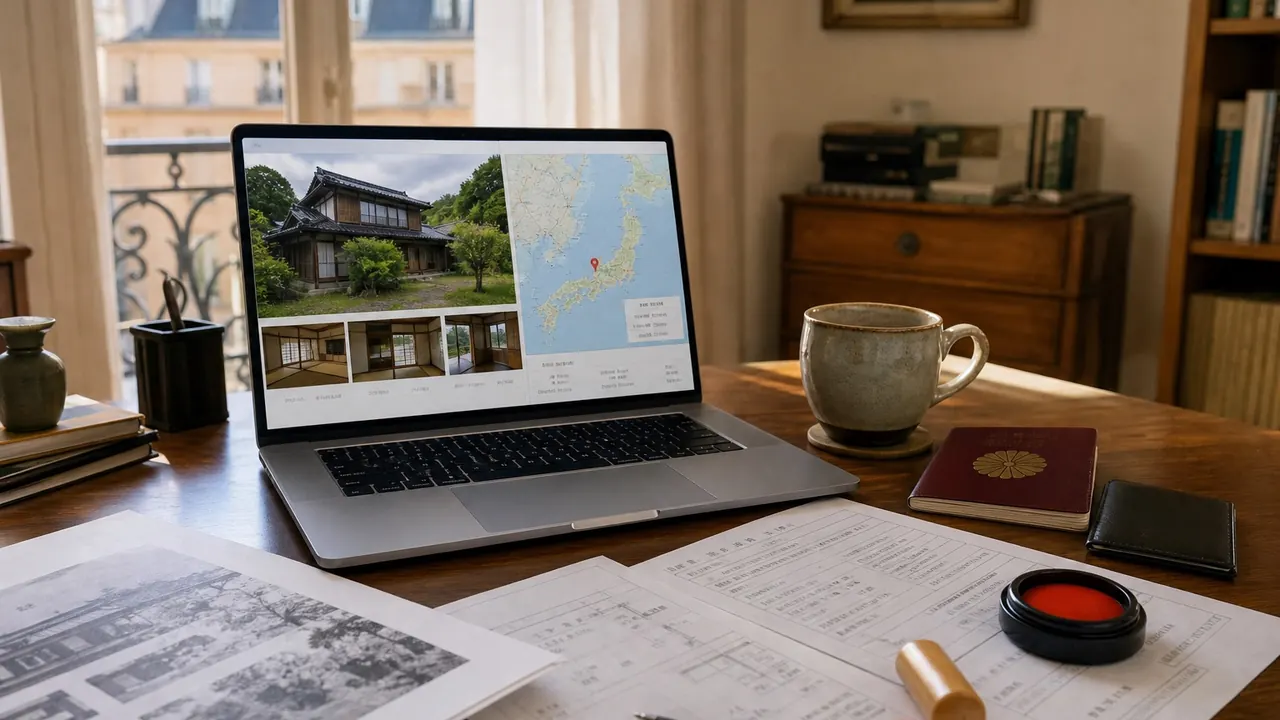
How to Buy a House in Japan From Overseas: A Remote Purchase Playbook
Japan places no nationality or residency restrictions on owning property. You can hold freehold land and buildings in your own name while living in another country, and thousands of overseas buyers do exactly that every year. What actually limits remote buyers is process, not law: documents, payments, and having someone trustworthy on the ground. If you have not seen the domestic sequence yet, read the step-by-step purchase process first: everything below is that process with distance added.
USD equivalents of yen figures are approximate, using ¥154 per US$1 for illustration. Yen amounts in parentheses retain the original figures; actual exchange rates and card charges vary.
Here is the sequence that works.
1. Shortlist Before You Fly (or Instead of Flying)
Start wide, then narrow by facts you can verify from abroad: location, layout, year built, land rights, and station access. This is exactly what our search engine is built for. Run a plain-language query like "detached house with garden under US$65,000 in Miyazaki" and filter from there.
Before falling in love with a listing, read up on what akiya listings really are and why old Japanese houses lose value. Cheap has reasons.
2. Work With an Agent Who Handles Non-Residents
The agent does more than open doors. For a remote purchase they will:
- video-call viewings and send unedited photo sets
- confirm the property can legally be rebuilt and insured
- explain the important matters document (juyo jiko setsumeisho)
- coordinate the judicial scrivener (shiho shoshi) who registers ownership
Many local agencies decline non-resident buyers because of language and payment friction. The ones who accept them usually have a defined process. Ask directly before investing weeks.
3. Offer, Contract, and the Documents You Sign Abroad
The purchase application (kaitsuke moshikomisho) is informal. The binding step is the sales contract, and non-residents typically sign either during a short visit or remotely through a power of attorney given to the scrivener or another representative.
Since you have no Japanese residence certificate or registered seal, you will substitute:
- a signature certificate or affidavit notarized in your country, sometimes with an apostille
- your passport as identity evidence
Your agent and scrivener will specify the exact set. Start early: notary appointments and apostilles can take weeks in some countries.
4. Moving the Money
Payment flows by international wire to the seller side or an escrow-style account arranged by the agency. Practical points:
- banks may ask for the contract to clear compliance checks, so keep documents ready
- budget for currency conversion spread, not just the transfer fee
- purchase costs beyond the price (taxes, scrivener, agent fee) usually add roughly 6 to 10 percent, itemized in our total cost guide
5. After Handover: Owning From Abroad
Registration is filed by the scrivener, and the fixed asset tax bill will follow you. Appoint a tax representative (nozei kanrinin) in Japan to receive and pay it. If the house sits empty, line up a management visit schedule; our article on the annual cost of owning a house in Japan covers what neglect can do to your tax bill.
Search Phrases This Helps With
This article supports searches like can foreigners buy property in Japan, buy house in Japan from overseas, remote akiya purchase, and Japan property power of attorney.
Further Reading
Next practical guide: How to Brief a Video Viewing of a Japanese House.
To watch one area from abroad before you buy, set up a saved-search alert.