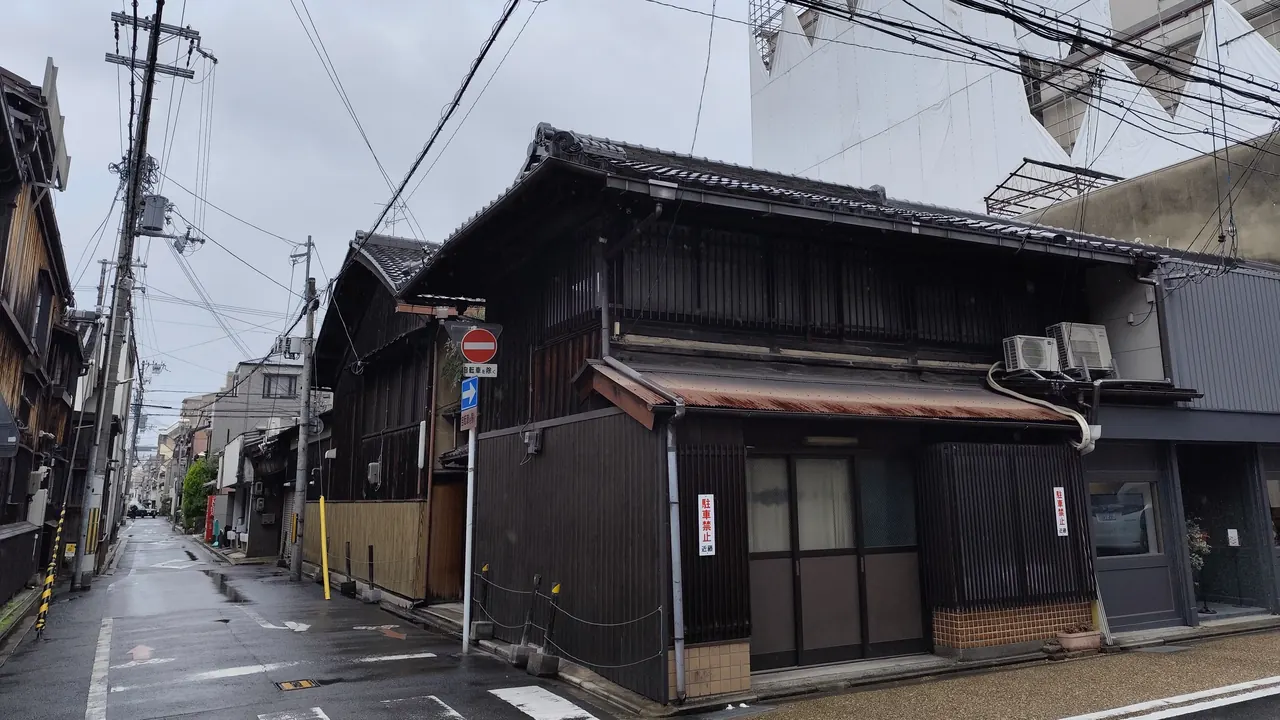
Header image: a two-storey wooden house on Teramachi-dori in Shimogyo ward, central Kyoto, photographed in June 2026 by TKdows 2026 and released under CC0 on Wikimedia Commons. It is a street, not a listing.
Buying a House in Kyoto: What Foreign Buyers Should Check
Yes: foreigners and people who live abroad can buy a house in Kyoto, and none of the Kyoto City rules below depends on nationality. They govern what you do with the house: a year's notice before demolishing a designated machiya, approval for exterior changes in the aesthetic districts, short-term rentals limited to about two months a year in residential zones, and from fiscal 2030 a tax on homes nobody lives in. On 3 November 2026 we counted 725 houses for sale in Kyoto Prefecture, median asking price ¥22.8 million (about US$144,000).
Rules read on Kyoto City's and the Ministry of Finance's own pages on 3 November 2026. Counts are Buy Houses Japan's Kyoto listings that day. USD at ¥157.82 per US$1.
What a house costs in Kyoto, by area
The 725 are detached houses with photos, a yen price and a check of the source listing in the last 14 days. Half ask between ¥10.6 million and ¥37.8 million, 59 ask under ¥5 million, and 298 of the 723 with a known build year predate Japan's 1981 seismic standard.
| Area | Houses | Median asking price | At ¥10M or less | Built 1980 or earlier | Median land |
|---|---|---|---|---|---|
| Central city: Kamigyo, Nakagyo, Shimogyo, Higashiyama | 105 | ¥37.8M (US$240,000) | 6 | 52% | 70 m² |
| Kita, Sakyo, Ukyo, Nishikyo wards | 210 | ¥28.4M (US$180,000) | 32 | 46% | 93 m² |
| Fushimi, Yamashina, Minami wards | 130 | ¥17.3M (US$109,000) | 31 | 49% | 70 m² |
| South: Uji, Joyo, Yawata, Kyotanabe, Kizugawa and neighbours | 171 | ¥23.8M (US$151,000) | 42 | 22% | 112 m² |
| Kameoka | 23 | ¥10.8M (US$68,000) | 11 | 22% | 150 m² |
| North and west: Fukuchiyama, Maizuru, Ayabe, Nantan, Tango coast | 86 | ¥7.9M (US$50,000) | 54 | 48% | 208 m² |
The old centre asks about twice what Fushimi and Yamashina ask, on lots of the same size. The southern towns are mostly newer commuter houses. And 54 of the 176 houses at ¥10 million or less are in the north and west, where the median lot is three times a central one. 71 houses were built in 1950 or earlier, 63 of them in Kyoto city, at a median of ¥32.0 million.
Can a foreigner buy a house in Kyoto?
Yes. The Kyoto rules on this page ask what you do with the house, not who you are. One national step applies if you live outside Japan: a non-resident who acquires real property reports it to the Minister of Finance through the Bank of Japan within 20 days, in Japanese, either personally or through an agent residing in Japan. The full remote process is in buying a house in Japan from abroad.
Machiya: ask whether the house is designated
Kyoto's machiya ordinance defines a Kyo-machiya as a wooden building built in or before 1950, when the Building Standards Act took effect, with a traditional structure and a form born of city life. The city's fiscal 2024 survey counted 34,580, down from 47,735 in 2008 and 2009, with about 800 still lost a year.
The city can designate a single machiya or a whole district. Designation brings two duties:
- A year's notice before demolition. The city says the aim is a pause to look for ways to keep the building, not a final ban on demolition.
- A change-of-owner notice from the new owner when an individually designated machiya is sold.
The rules may tighten. The city consulted the public from 24 July to 24 August 2026 on a draft amendment. The draft would let it name an owner who demolishes an individually designated machiya without notice, in serious cases, on top of today's ¥50,000 fine. Check the current text before you sign.
Designation also brings money. For fiscal 2026 the city raised its machiya renovation grant to two thirds of the cost, up to ¥2 million in the 21 designated districts and ¥5 million for an individually designated machiya, and added work such as underfloor heating and insulation. See kominka renovation costs for the rest of the budget.
Exterior changes need approval in the aesthetic districts
Kyoto city's landscape districts under the Landscape Act include aesthetic districts (bikan chiku and bikan keisei chiku). There, new building, extension, rebuilding, moving, and repairs, redecoration or colour changes that alter the exterior need the city's certification. Before you price a new roof, windows or facade, ask which district the address is in.
Renting it out: Kyoto's minpaku limits
Kyoto City allows short-term rentals by two routes:
- Private lodging notification: up to 180 days a year, and in residential-only zones in principle only from noon on 15 January to noon on 16 March. If the owner does not live there, a manager must be within a 10-minute walk, about 800 metres.
- Inn licence: no day limit, but generally not allowed in residential-only or industrial zones; the application fee is ¥52,800.
The city aims to propose stricter minpaku rules by March 2027. On a quiet residential street, plan on a home or a long-term let, and read Airbnb, minpaku and Japan house sales before counting rental income.
The vacant-home tax from fiscal 2030
Kyoto City will tax homes where nobody has their main residence, including holiday and second homes, in its urbanisation promotion area. The page, updated 21 August 2026, says:
- When: from fiscal 2030, on the home's use on 1 January 2030, one year later than planned because of system development.
- How much: 0.7% of the building's assessed value, plus 0.15% to 0.6% on the land's assessed value per square metre times the floor area.
- Not taxed: buildings assessed under ¥300,000 (¥1 million for the first five years); homes declared for rent or sale, for up to a year; business use; designated historic buildings.
- Relief on application: for example, owners posted abroad, for up to five years.
It is a city tax, so Maizuru or Kameoka are outside it. A Kyoto city house you visit a few weeks a year is what it targets.
How to search Kyoto in English
- Pick the area. Try a house in Kyoto city under ¥20 million, a traditional house near Kyoto under ¥20 million or a house in Maizuru under ¥10 million. Your first search runs without an account.
- Save it. The free Explorer plan sends one weekly email of new matches; Homebuyer (¥2,980 a month) adds daily or weekly alerts (pricing).
- Read the build year. 1950 or earlier: ask about designation. Before 1981: read what the seismic standard means.
- Ask before you travel. Press Ask about this home on the listing. No account is needed; we answer you, and pass your message to the listing agency only if you tick that box. Ask three things: is it designated, is it in an aesthetic district, and what is the zoning?
Questions about buying in Kyoto
Can foreigners buy property in Kyoto?
Yes. Kyoto City's rules on machiya, exterior design, short-term rentals and empty homes apply to every owner, whatever their nationality. A non-resident buyer, or an agent residing in Japan, reports the purchase to the Minister of Finance within 20 days.
How much is a house in Kyoto?
On 3 November 2026 the median asking price of 725 houses for sale in Kyoto Prefecture on Buy Houses Japan was ¥22.8 million (about US$144,000): ¥37.8 million in central Kyoto city, ¥17.3 million in Fushimi, Yamashina and Minami, and ¥7.9 million around Maizuru and Fukuchiyama.
Does Kyoto tax empty homes?
From fiscal 2030. Kyoto City will tax homes in its urbanisation promotion area where nobody has their main residence, holiday and second homes included: 0.7% of the building's assessed value plus 0.15% to 0.6% on land value times floor area. Homes declared for sale or rent are exempt for up to a year.
Start with the area, then ask
Browse the Kyoto houses without an account, or describe yours in one sentence and start a search. When one fits, press Ask about this home with the three questions above.
Sources, read on 3 November 2026: the Kyoto City and Ministry of Finance pages linked above, and our Kyoto page and pricing page. Prices and counts change daily.